
Central Heating Leak Detection in Andover
A central heating leak in Andover was located using a damp meter, tracer gas, thermal imaging, and pressure testing, completing central heating leak detection with the concrete floor left exposed to dry before the carpet is relaid and no further leaks indicated on the system. The work was carried out by engineer Krzysztof Kobylinski.




The original leak detection company, est. 2011
Facts
| Location | Andover |
|---|---|
| County | Hampshire |
| Leak Type | Central Heating Leak Detection |
| Property Type | Residential property |
| Detection Method | Damp Meter, Tracer Gas, Thermal Imaging, Pressure Testing |
| Outcome | Leak found on copper tee junction beneath hallway floor, repaired. |
Symptoms
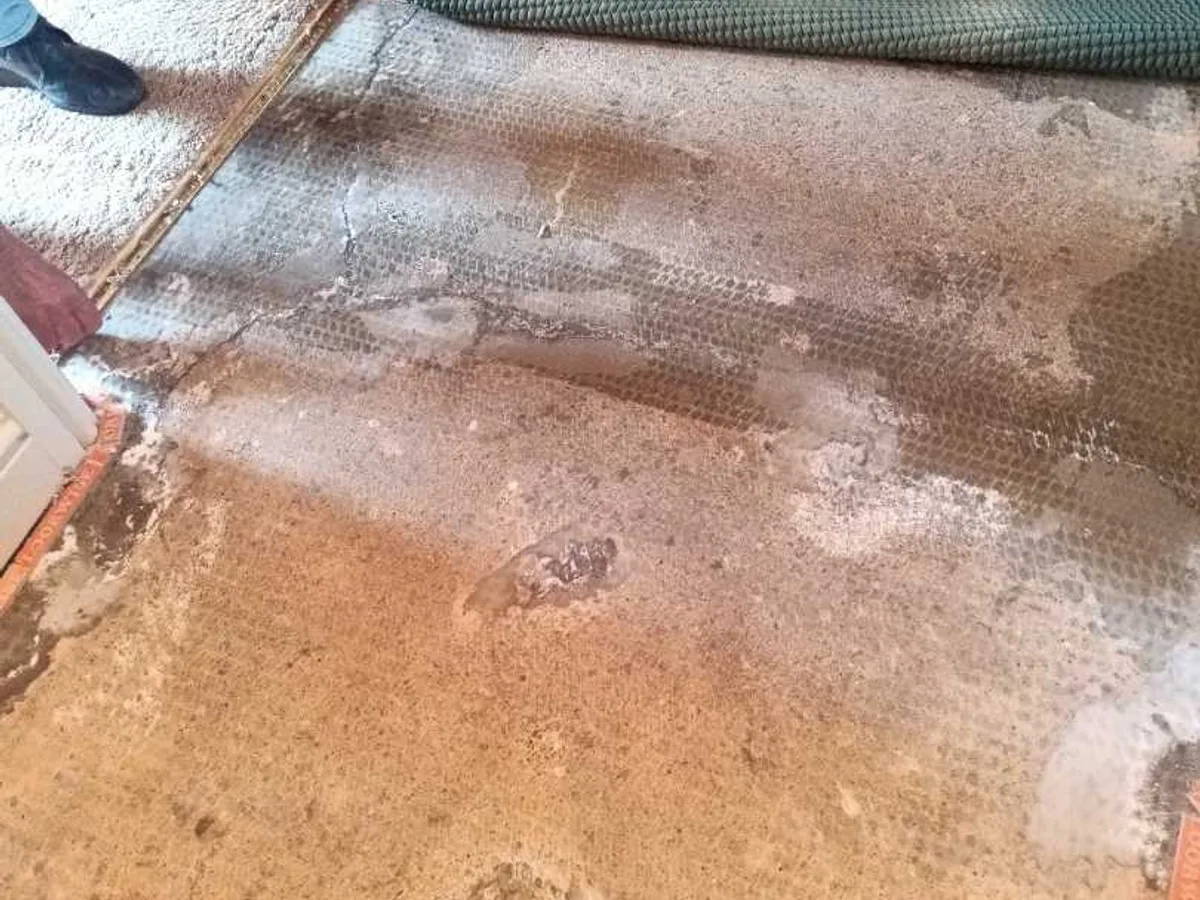
The absence of visible water made this a difficult problem to diagnose without specialist equipment. High damp readings in the wall pointed toward a concealed leak, most likely within the heating pipework running beneath the floor.
Central heating leak detection was required to establish the exact source and extent of the issue before any remedial work could be planned.
Methods Used

This methodical approach — damp meter first to identify the affected zone, tracer gas to locate the precise point — is standard practice in central heating leak detection where pipes are buried beneath solid floors. Once the location was confirmed and the customer gave permission to proceed, the flooring was excavated and the fault was exposed.
Damp Meter. Used to identify elevated moisture levels in the hallway wall and floor, establishing the zone of likely leakage beneath the solid floor.
Tracer Gas. Introduced into the heating system to trace the precise leak point, with a gas reading detected at the end of the hallway confirming the excavation location.
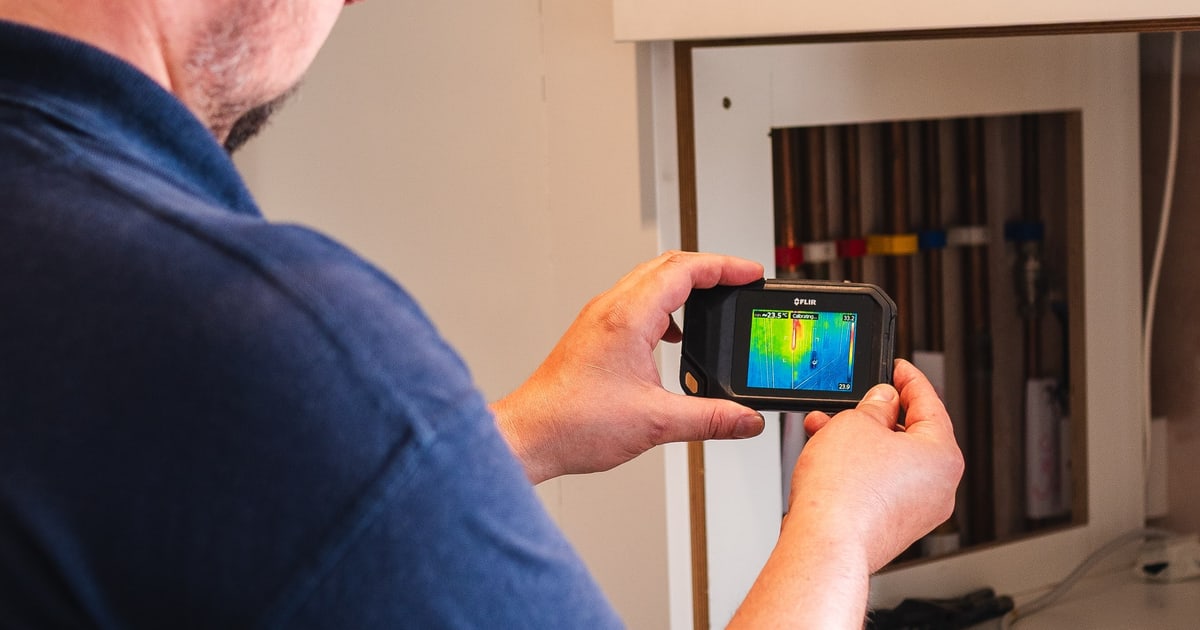
Thermal Imaging. Deployed during the investigation to assist in identifying temperature anomalies associated with the concealed leak beneath the floor.
Pressure Testing. Used after the repair to confirm the heating system was holding pressure and that no further leaks remained on the circuit.
Investigation Process
-
1Initial damp meter survey
The hallway wall near the bathroom was surveyed with a damp meter, returning high readings. No visible water was present.
-
2Floor damp reading identified
The carpet in the hallway was lifted and a damp reading was located in the middle of the floor, indicating a leak beneath the solid floor surface.
-
3Tracer gas introduced
Tracer gas was installed into the heating system and a gas reading was detected at the end of the hallway, pinpointing the leak location.
-
4Customer informed and permission granted
The findings were communicated to the customer, who gave permission to excavate the flooring.
-
5Excavation and leak found
The floor was dug down and the leak was found on a copper tee junction within the heating pipework.
-
6Repair carried out
The faulty junction was repaired using six press-fit fittings and copper pipe.
-
7Pressure test passed
The heating system was pressure tested following the repair and held pressure, confirming no further leaks on the system.
-
8System recommissioned
The heating system was filled, brought up to temperature, and all radiators confirmed hot and working before the engineer left site.
-
9Drying advice given
The engineer advised leaving the carpet up to allow the concrete floor to dry out; the customer agreed to follow this recommendation.
Result & Outcome

The concrete floor was left exposed on the customer's agreement to allow it to dry before the carpet is relaid. No further leaks were indicated on the system at the time of completion.
Suspect a leak at your property?
ADI Leak Detection specialists investigate leaks like this across the UK every day. No find, no fee terms apply on qualifying jobs.