
Central Heating Leak Detection in Alton
A central heating leak in Alton was located using thermal imaging, a damp meter, and tracer gas, with central heating leak detection confirming two breach points in the buried ground floor pipework before any structural work took place. Found by engineer Robert Gires.




The original leak detection company, est. 2011
Facts
| Location | Alton |
|---|---|
| County | Hampshire |
| Leak Type | Central Heating Leak Detection |
| Property Type | Residential property |
| Detection Method | Thermal Imaging, Damp Meter, Tracer Gas |
| Outcome | Leaks found in kitchen and living room floor, pipework replaced. |
Symptoms
The property in GU34 is a large detached house with a substantial heating and hot water setup: an oil boiler in the ground floor utility room serving 20 radiators and an underfloor heating circuit, plus two hot water cylinders on the first floor. With a system of that scale, tracking down a concealed leak in buried pipework is a significant undertaking.
Central heating leak detection in a property like this requires a methodical, multi-stage approach to isolate which part of the system is failing before any physical investigation begins.
The ground floor pipework runs beneath a concrete slab, with sections hidden behind plasterboard walls in the kitchen and living room. The scale of the installation and the age of the copper pipework meant that any failure in the buried runs could go undetected for some time, with water migrating through the slab and into wall cavities without obvious surface signs.
The condition of the pipework throughout the ground floor was found to be seriously deteriorated — not just at the point of leakage, but across the system as a whole. This made the situation more urgent than a single localised repair would suggest.
Methods Used

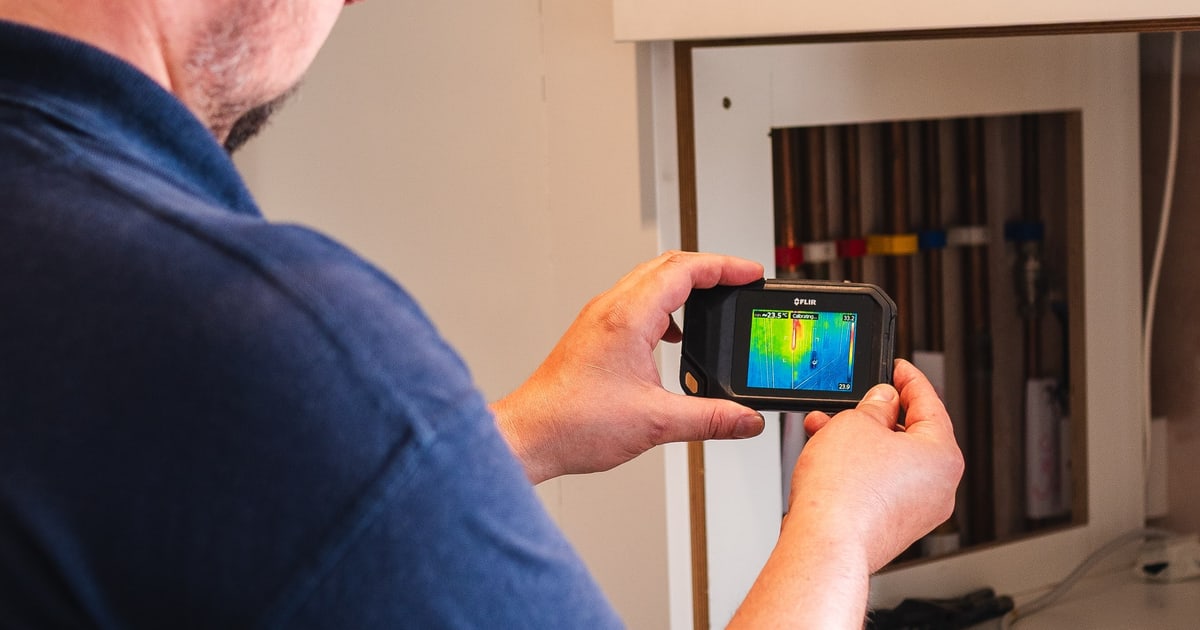
The investigation began with thermal imaging to map the underfloor pipework routes through the concrete slab, which revealed anomalies — areas of abnormal heat distribution — behind the fridge freezer in the kitchen and in the living room. Damp meter readings on the plasterboard walls in both locations confirmed elevated moisture levels consistent with an active leak in the buried pipework beneath and behind those areas.
This combination of thermal and damp evidence gave a clear target zone before any destructive investigation was carried out.
With the suspect areas identified, the heating system was purged using an air compressor to remove all water from the pipework. Tracer gas was then introduced at 1.5 bar pressure, and a tracer gas detector was used to scan the floor and wall surfaces.
Gas was detected at both flagged locations — behind the fridge freezer and in the living room — confirming active breaches in the buried copper pipework at those points. This is a standard and reliable sequence in central heating leak detection: non-invasive thermal and moisture mapping first, followed by tracer gas confirmation to pinpoint before any opening up of the structure.
Thermal Imaging. Used to map the underfloor pipework layout through the concrete slab and identify thermal anomalies indicating potential leak sites in the kitchen and living room.
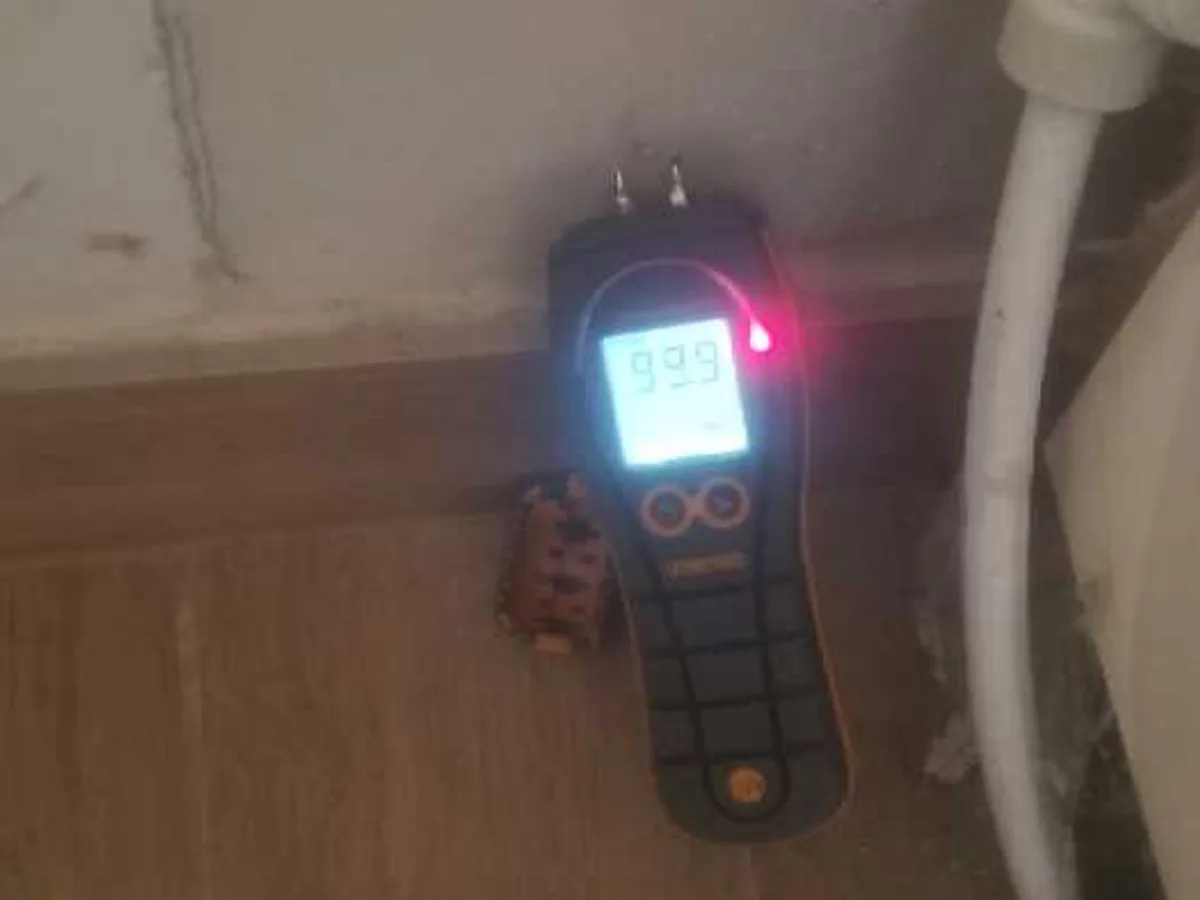
Damp Meter. Used to measure moisture levels in the plasterboard walls behind the fridge freezer in the kitchen and in the living room, both of which returned very high readings consistent with water ingress from the buried pipes.
Tracer Gas. Introduced into the system at 1.5 bar after the water was cleared out; gas was detected at both suspect locations, confirming the precise positions of the leaks before any floor or wall was opened.
Investigation Process
-
1Thermal imaging survey
Thermal imaging was carried out across the ground floor concrete slab to map the buried pipework and identify anomalies. Two areas of abnormal thermal signature were identified: behind the fridge freezer in the kitchen and in the living room.
-
2Damp meter readings taken
Damp meter readings were taken on the plasterboard walls at both flagged locations. Both returned very high moisture levels, corroborating the thermal findings and pointing to active leakage from the buried pipework.
-
3System purged with air compressor
The heating system was connected to an air compressor and all water was removed from the pipework, preparing the system to accept tracer gas without interference from residual water.
-
4Tracer gas introduced and tested
Tracer gas was introduced into the system at 1.5 bar. Using the tracer gas detector, gas was detected at both previously identified locations — behind the fridge freezer and in the living room — confirming active pipe failures at those points.
-
5Floor and wall opened up
The wooden floor was lifted, the concrete slab excavated at the leak sites, and the plasterboard wall was cut back in both the kitchen and living room to expose the failed copper pipework.
-
6Pipework replaced
The deteriorated copper pipe at the leak locations was removed and replaced with plastic pipe and push-fit fittings, restoring integrity to the affected sections of the system.
Result & Outcome

Leaks were confirmed at two locations in the ground floor buried pipework: behind the fridge freezer in the kitchen and in the living room, both on the same wall run. Tracer gas detection at 1.5 bar provided precise confirmation of the breach points before any structural work was carried out, meaning excavation and wall opening were targeted directly at the fault locations without unnecessary damage elsewhere.
The failed copper pipework was replaced with plastic pipe and push-fit fittings at both sites. However, the condition of the copper pipework across the entire ground floor was found to be very poor, not just at the two repaired sections. The engineer advised the customer to run the heating system at low pressure and low temperature and flagged that the remaining ground floor copper pipework requires urgent replacement.
For a property of this size with underfloor heating and 20 radiators, a structured central heating leak detection process like this — moving from non-invasive thermal and damp mapping through to tracer gas confirmation — is the only reliable way to limit unnecessary damage while locating faults in buried systems. The repairs carried out address the active leaks, but the broader condition of the system means further work is needed to prevent recurrence.
Suspect a leak at your property?
ADI Leak Detection specialists investigate leaks like this across the UK every day. No find, no fee terms apply on qualifying jobs.