


How to Carry Out
Follow these simple steps to check for water leaks using your water meter.
1 Make sure no water is being used in or on the property
Ensure:
- No taps are running
- No toilet cisterns filling up
- No washing machines are on
- No dishwashers are in use
- Your Central heating system is off
2 Locate your water meter!
Our water meter looks like this
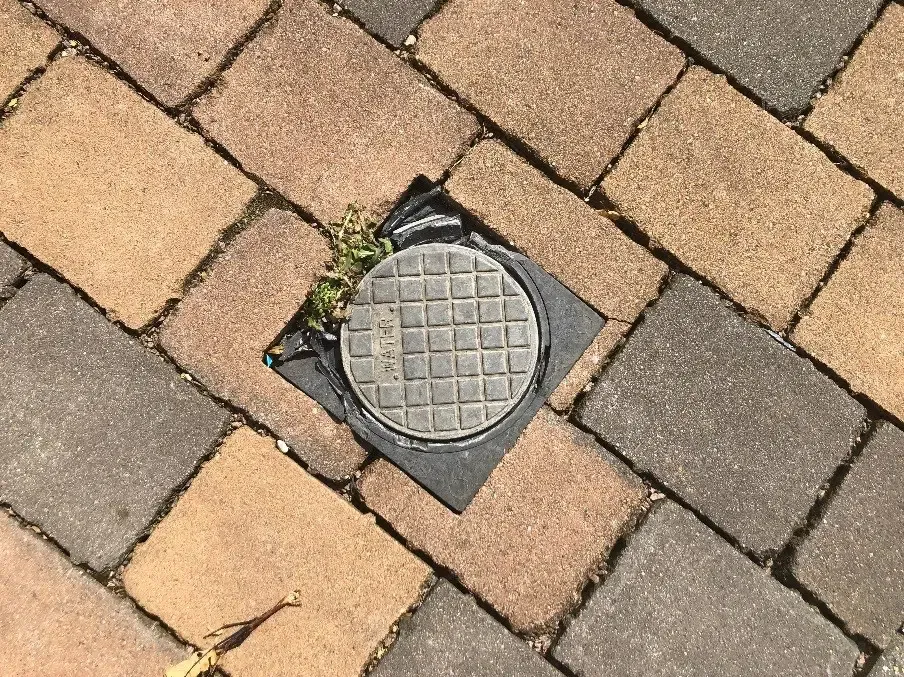
Your water meter will usually be on the boundary between your property and the nearest public footpath, road or walkway.
Depending on the type of property, it could be just a few feet away, or several hundred meters away, maybe even up to a mile.
Some properties do not have a water meter. Some properties have a shared water supply with just one water meter measuring the total usage of several properties.
Check the serial number on the meter with the one on your water bill to make sure you're taking the reading from the right meter!
If you don't know where yours is or you're not sure if you have one, contact your Local Water provider – they should be able to tell you.
3 Take a reading from your meter
Please be careful when removing the plastic cover to take a reading! You may need to wedge a screwdriver down the side of the cover.
Underneath this there will be a polystyrene or foam disc that protects the meter from frost. Make sure you put the protective cover back in place when you have finished taking your meter reading.
If you see any of the cogs or dials or rotating, this means you have a leak.
Take a note of the meter reading and then wait a while.
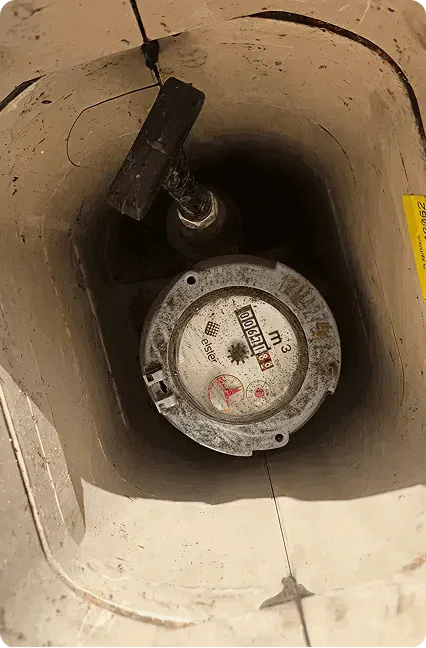
4 Take another reading from your meter
If you only see a tiny amount of movement, or the meter stops and starts this means you have a small leak. Wait an hour or so, then take another reading.
If you see fast movement, wait 1 minute or so, then take another reading.
5 Calculate your Leak Rate
Working out the difference between the two readings will tell you your leak rate over 1 minute or 1 hour respectively, or for whatever fixed period of time you were monitoring the leakage rate.
It's really helpful for us to know the leak rate before we book you in for a Leak Detection.
But if you don't manage to calculate your leak rate, don't worry, we can still book you in – it's enough just to know that there is movement on your meter.
6 Isolation testing
If you want to know more about your leak, isolation testing can help you determine if it's on your internal or external pipework.
For this, you'll need to know the location of your internal stopcock and be comfortable with 'isolating it', (that's what we call 'turning it off!').
This will stop water from passing the isolation valve – it will cut off the water supply to the property.
Be careful when isolating your internal stopcock, as they can be stiff and brittle and old ones have been known to break easily.
Once you have turned off the internal stopcock, take another take another look at your water meter.
If the meter has stopped, that means your leak is after the internal stopcock, on your internal pipework somewhere.
If your meter carries on moving then you know your leak is before the internal stopcock, somewhere on your external supply.
If you have any other isolation points (stopcocks) in or around your property, you can repeat this test to further narrow down your leak.